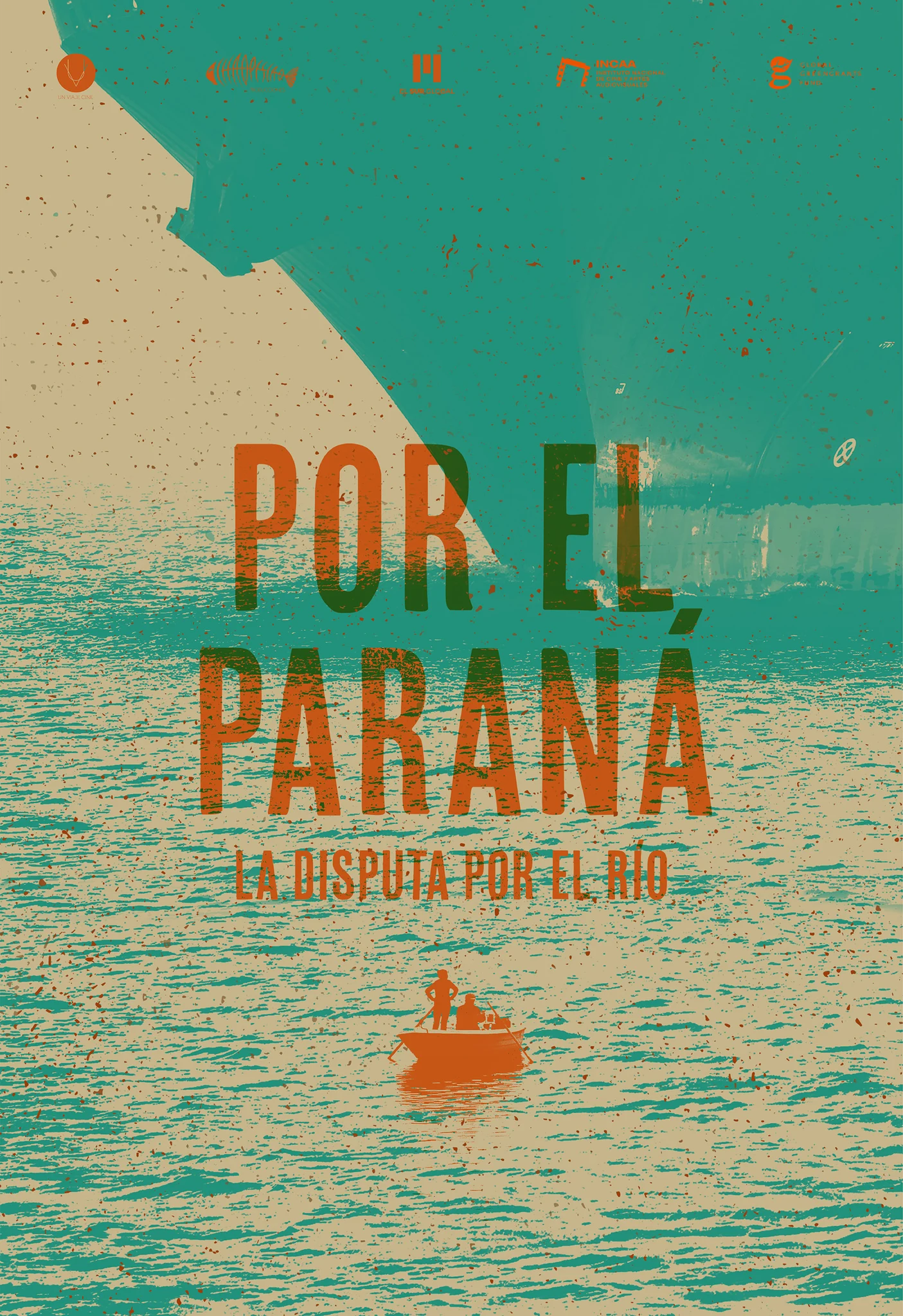
A story, a journey
Por el Paraná: The dispute over the river

The river is part
of who we are
A journey along the Paraná and the stories that make it a river. A film that meets with communities to imagine and build different futures with water.
Production and filming
A journey along the Paraná in search of the stories that make it a river
Amid a historic low-water period, a team of documentary filmmakers sets out to listen to those who live along its banks. Fishers, island residents, naturalists and researchers tell the story of a territory where water sustains work, memory, biodiversity and everyday life.
The journey encounters a dispute: export projects seeking to transform the river, and communities whose existence depends on its health. The film raises questions about sovereignty, the commons and the futures we can build with our waters.
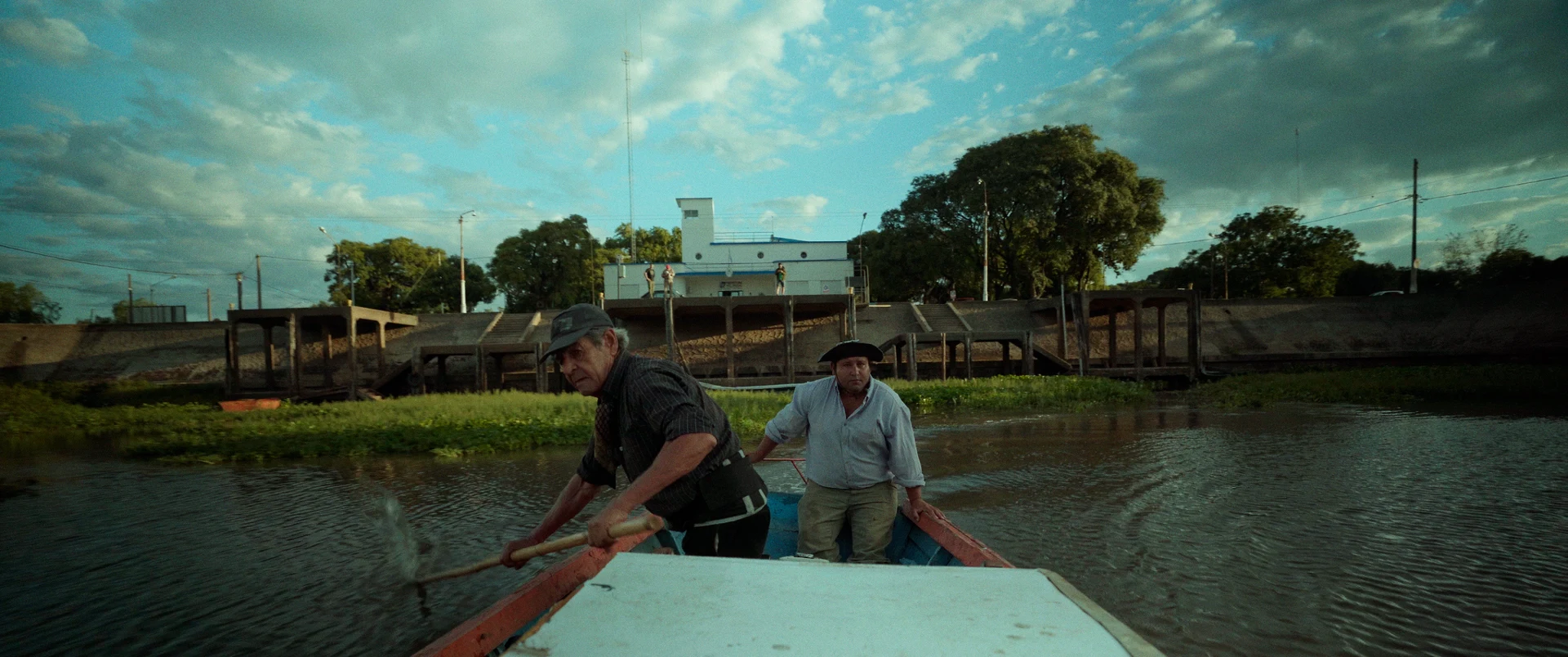
Filming from the water
Filming took us along the shores, islands and cities of the basin. Navigation shapes the story: from boats and riverbanks, the camera draws close to people, their work and their ways of living with the river.
Conversations with fishers, island residents, naturalists and researchers intertwine with everyday life and the landscapes exposed by low water. Water emerges as a cultural, political and ecological territory, as well as a path to meeting one another.
The project brings research, writing and documentary production together with a distribution strategy that carries these questions into other territories. The film and its campaign connect at every gathering: watching, talking and considering what we can do together.
A story that keeps travelling
The campaign combines cinema and platform distribution, festival screenings and events organised with communities, institutions and organisations. Every screen opens a new conversation about the river.
Screenings
In cinemas, cultural spaces, universities and communities
Attendances and views
Combined estimate for in-person screenings and CINE.AR
Assemblies
With organisations, projects, institutions and local governments
The festival journey
2024
The film in the press
- Diario HoyAlejo di Risio and Franco González present their new filmInterview
- El LitoralThe documentary Por el Paraná places Rosario at the centre of an environmental disputeInterview
- Tiempo ArgentinoPor el Paraná: economic plunder, climate crisis and the resistance of river cultureInterview and review
- EscribiendoCineBetween trade and ecological balanceReview
- Humboldt · Goethe-InstitutWater on the big screenArticle
- La Izquierda DiarioPor el Paraná, the dispute over the river: a documentary against extractivismReview
- La Opinión de San PedroA gathering and screening of Por el ParanáScreening coverage
- ABCHoyThe Paraná resonated in TandilEvent report
- El Mundo de BerissoCinema in defence of the environmentScreening coverage
- Otros CinesThe full programme of the 2024 International Environmental Film Festival (FINCA)Festival coverage
Partial record of original publications. Catalogue listings, social media posts and print versions of interviews already counted are excluded.
A network that makes every gathering possible
- Astillero Río Santiago
- Biblioteca Central de la Provincia
- Centro Cultural Cabayú Cuatiá
- CIIE La Plata
- Cine Gaumont
- Cineclub Municipal Hugo del Carril
- Cinemateca Uruguaya
- Club Futuros
- Comité de Cuenca Popular del Paraná Santafesino
- Complejo Cultural Plaza
- CTA Autónoma Santa Fe
- Cuidadores de la Casa Común · San Pedro
- El Cairo Cine Público
- El Cultural San Martín
- El Río Sana
- FATRAC
- Festival Isla Verde
- FINCA
- Foro por la Recuperación del Paraná
- Foro por la Reserva Natural de San Martín
- Fundación Finnegans Impacto
- Fundación Humedales
- Galpón FACE
- Germinar
- Global Shapers Buenos Aires
- Humedales en Red
- ISFD 96
- La Compañía
- Latin American Studies Association
- Museo de la Memoria · Rosario
- Olla Popular China Cuella
- Patrimonio Natural · Pilar
- Remamos por Nuestros Ríos
- Remar Contracorriente
- Rencontres du Cinéma Latino-Américain
- Reserva Natural Municipal de Pilar
- SiPreBo
- Tenemos Que Ver
- Tramas Derecho en Movimiento
- UBA
- UNAHUR
- UNDAV
- UNER
- UNIOESTE
- UNLP · Hidráulica Comunitaria
- UNR
- UNSAM
- UNTREF
Organisations and institutions appearing in the records of screenings and gatherings. Different teams within the same university are grouped as one institution; this list represents part of the campaign’s network.

The river travels with those who watch
A film that finds new meanings in every place
From the Gaumont and El Cairo cinemas to cultural centres, unions and classrooms, screenings become conversations rooted in place. In Escobar, dialogue connects with struggles in the Luján basin; at UNSAM, with the Reconquista River and food sovereignty; at UNLP, with community water management.
Festivals and educational spaces have taken the journey to 9 countries: Germany, Argentina, Bolivia, Brazil, Cuba, United States, France, Paraguay, Uruguay.
A network of spaces and organisations
Among those who hosted screenings, organised gatherings or joined the conversations:
Astillero Río Santiago · Biblioteca Central de la Provincia · Centro Cultural Cabayú Cuatiá · CIIE La Plata · Cine Gaumont · Cineclub Municipal Hugo del Carril · Cinemateca Uruguaya · Club Futuros · Comité de Cuenca Popular del Paraná Santafesino · Complejo Cultural Plaza · CTA Autónoma Santa Fe · Cuidadores de la Casa Común · San Pedro · El Cairo Cine Público · El Cultural San Martín · El Río Sana · FATRAC · Festival Isla Verde · FINCA · Foro por la Recuperación del Paraná · Foro por la Reserva Natural de San Martín · Fundación Finnegans Impacto · Fundación Humedales · Galpón FACE · Germinar · Global Shapers Buenos Aires · Humedales en Red · ISFD 96 · La Compañía · Latin American Studies Association · Museo de la Memoria · Rosario · Olla Popular China Cuella · Patrimonio Natural · Pilar · Remamos por Nuestros Ríos · Remar Contracorriente · Rencontres du Cinéma Latino-Américain · Reserva Natural Municipal de Pilar · SiPreBo · Tenemos Que Ver · Tramas Derecho en Movimiento · UBA · UNAHUR · UNDAV · UNER · UNIOESTE · UNLP · Hidráulica Comunitaria · UNR · UNSAM · UNTREF
Screenings and gatherings
37 in-person screenings and gatherings and 1 online participation in this archive. The entries bring together published programmes, reports and campaign records.
38 screenings and gatherings
- Tandil · ArgentinaView record
La Compañía · Cine y Territorio
A gathering with Álvaro Álvarez of UNICEN/CONICET, with the directors joining remotely.
- San Martín · ArgentinaView record
Complejo Cultural Plaza
Cinema with Directors: a free screening and conversation with the filmmakers.
- La Plata · ArgentinaView record
CIIE La Plata · ISFD 96
An educational experience in comprehensive environmental education for teachers and the community, with Natalia Badino and Franco González. The rescheduled date is listed only once.
- Santa Fe · ArgentinaView record
CTA Autónoma · Proyectar Soberanía
Screening and discussion with Facundo Retamoza, Marianela Galanzino and Gabriela S. Ferrer. Music by Agu Marcuzzi and Speciali Surubí Orquesta.
- Buenos Aires · ArgentinaView record
Cine con Impacto
Fundación Finnegans Impacto and Global Shapers Buenos Aires: screening and conversation with Alejo di Risio and Rosario Sánchez Granel. The report does not give the exact day.
- La Paz · ArgentinaView record
Centro Cultural Cabayú Cuatiá
Screening and discussion organised by Georgina Pecchia, with Pol Nada participating and a greeting from Franco González. The cultural centre was also a filming location.
- Buenos Aires · ArgentinaView record
Agronomía · UBA / IESARA
IESARA launch events. A panel with Vanina Pietragalla, Patricia Lombardo and Alejo di Risio on river basins and agri-food systems.
- Avellaneda · ArgentinaView record
UNDAV
Screening and discussion with the directors, organised through the Tourism Destinations and Heritage courses and open to the community.
- La Plata · ArgentinaView record
Facultad de Ingeniería · UNLP
The first Water and National Sovereignty gathering, organised by the Open Chair of Community Water Management, with the film and its directors.
- Buenos Aires · ArgentinaView record
Filosofía y Letras · UBA
The Dialogues for the Environment series, at the Anexo Bonifacio screening room. A collaboration with Environmental Policies, Geography, the Romualdo Ardissone Institute and PERT.
- San Martín · ArgentinaView record
Teatro Tornavía · UNSAM
Water is worth more than anything: cinema and dialogue with Franco González and Claudia López of the Foro por la Reserva Natural de San Martín, connecting food sovereignty and transitions towards sustainability.
- Rosario · ArgentinaView record
GeoSUR · UNR / Museo de la Memoria
Screening and collective conversation in the GeoSUR series: geopolitical experiences from the South, organised by the Latin American and Argentine Geopolitics course at the UNR Faculty of Political Science and International Relations.
- Buenos Aires · ArgentinaView record
Ciclo de Cine ANTI
A screening at Castro Barros 874, with a food collection for the Olla Popular China Cuella community kitchen in Parque Patricios.
- Marechal Cândido Rondon · BrazilView record
UNIOESTE
An open screening with Portuguese subtitles in the postgraduate History and Geography auditorium.
- Montevideo · UruguayView record
Cinemateca Uruguaya · Tenemos Que Ver
Screening and Assembly for the Future of Rivers with the directors, audiences, activists, journalists, artists and people involved in defending water.
- Córdoba · ArgentinaView record
Cineclub Municipal Hugo del Carril
An environmental cinema and discussion series at the Fahrenheit Auditorium, with a conversation after the screening.
- Escobar · ArgentinaView record
Germinar · Sembrando Conciencia
Environmental cinema and conversation with voices from the Luján basin: Marina Lemos, Graciela Capodoglio and the filmmakers. Moderated by Francisco García Erize.
- Hurlingham · ArgentinaView record
UNAHUR · Book Fair and Environment Week
A screening with Alejo di Risio at 6 pm, at the Hurlingham Book Fair during Environment Week.
- La Plata · ArgentinaView record
Biblioteca Central · Sala Haroldo Conti
Remamos por Nuestros Ríos: an open screening with naturalist Julio Milat.
- San Francisco / online · United StatesView record
LASA Film Festival
Selected for the Latin American Studies Association film festival, with online access. Listed separately from in-person gatherings.
- Isla de la Juventud · CubaView record
Cine Caribe · Isla Verde
Competition selection at the Caribbean film and environment festival. A screening and discussion with one of the directors.
- Buenos Aires · ArgentinaView record
Galpón FACE · Club Futuros
Screening and Assembly for the Future of the River: collective futures design for our basins and communities. Part of water month, Remar Contracorriente and El Río Sana.
- Pessac · FranceView record
Cinéma Jean Eustache
The 42nd Rencontres du Cinéma Latino-Américain, in the Bordeaux area.
- Vuelta de Obligado · ArgentinaView record
Encuentro junto al río
Riverbank clean-up, film and conversation with Cuidadores de la Casa Común de San Pedro, as part of Remar Contracorriente.
- San Pedro · ArgentinaView record
Boulevard Moreno 550
A gathering and open screening in the hometown of one of the filmmakers.
- La Plata · ArgentinaView record
SiPreBo
A gathering with the filmmakers, workers from Astillero Río Santiago and Juan Recchia Páez of UNLP.
- Rosario · ArgentinaView record
El Cairo Cine Público
A screening included in the cinema’s public programme.
- Rosario · ArgentinaView record
El Cairo Cine Público
A screening included in the cinema’s public programme.
- Rosario · ArgentinaView record
El Cairo Cine Público
A screening included in the cinema’s public programme.
- Rosario · ArgentinaView record
El Cairo Cine Público
A screening included in the cinema’s public programme.
- Rosario · ArgentinaView record
El Cairo Cine Público
A screening included in the cinema’s public programme.
- Rosario · ArgentinaView record
El Cairo Cine Público
A presentation with the team and contributions from social and environmental organisations.
- Buenos Aires · ArgentinaView record
El Cultural San Martín · FINCA
The seventh International Environmental Film Festival, in the We Are Water section.
- Buenos Aires · ArgentinaView record
Cine Gaumont
Theatrical release. The cinema run is recorded as one milestone, without inferring how many individual screenings took place.
- Hurlingham · ArgentinaView record
UNAHUR · Environmental cinema
Screening in the series “Against denialism: stories of resistance and environmental activism”, organised by the Environmental Sciences and Environmental Management programmes.
- Paraná · ArgentinaView record
FCEDU · UNER
A screening at the Rodolfo Walsh Auditorium, organised by the Extension and Culture team of the Faculty of Education.
- University screeningTres de Febrero · Argentina
UNTREF · Outdoor steps
A screening on the outdoor steps of Universidad Nacional de Tres de Febrero.
- University screeningCampo Grande · Brazil
University screening · Campo Grande
The film also travelled to a university setting in Campo Grande, Brazil.
A community that carries the message further
Join the WhatsApp channelThe campaign continues between screenings. The WhatsApp group brings together people and organisations who share a commitment to the river: proposals circulate, conversations continue and connections help take the film to new places.
The campaign also connects with Cuencas Argentinas (NotiParaná), an open channel covering the news, cultures and gatherings of our river basins. Those who join can bring their community together, organise a screening and share the film’s questions. Every viewer can become a voice for the campaign, and every gathering an opportunity for collective advocacy.
Assemblies for the Future of the River
After the film, imagining the river we want to live with
The campaign brings screenings and gatherings together with organisations, projects, institutions and local governments. Assemblies open a horizontal space to create images of desirable futures and connect them with action in the present.
In a 45–60 minute session, adapted to each community, participants imagine the lives of the river and its communities in 50 or 100 years. Local voices contribute their experiences; participants share their desires, create a mural and choose paths to begin making them real.
The gatherings at Club Futuros in Buenos Aires, and Tenemos Que Ver in Montevideo, show how cinema, conversation and collective imagination can come together.
Assemblies for the Future of the River
(Facilitation method)
Assemblies for the Future of the River
(Facilitation method)Imagining desirable futures is an act of courage. It invites us to explore the reach of our imagination, co-design across disciplines and work together to build political possibility.
The assembly offers an exercise in collective speculation: giving shape to an image of a desirable future for the river and recognising what we can do today to move towards it. An everyday scene opens a conversation about the changes we want, who sustains them and which relationships with water make them possible.
This is an adaptable sequence of around 55 minutes. Work in small groups with paper, markers and a map of the basin; one person facilitates while another gathers the images and agreements. Drawing skills and a shared vision in advance are not required.
5 minutes · A shared question
Set the horizon
Choose the river or basin that brings us together and a horizon of 50 or 100 years. Share a question: what would a day in our lives look like if we had learned to care for the river and let it care for us? Listen to the first answers without looking for solutions yet.
8 minutes · Collective mapping
Make maps together
Map the stories, actions, soils, organisations and programmes that already exist. Which elements of our culture could we strengthen to move towards that world? Mapping also reveals gaps in our visions of the future: what remains unimagined, whose voices are missing and which conflicts need to change.
12 minutes · A future scene
Inhabit the desirable
We are in that future. What do we see around us? What are our communities like? What is our culture like? Tell a scene in the first person: going to the riverbank, working, fishing, playing or meeting someone. Make room for water, wetlands and other lives; describe what has changed in access, care and decisions about the territory.
10 minutes · A future prototype
Give it a form
Turn the scene into a short story, drawing, postcard or object from that world: a sign on a public riverbank, a news item, a radio message. Give it a date and a place. The piece makes the image of the future tangible so people can share it, discuss it and add details together.
10 minutes · A shared mural
Connect the images
Bring the pieces together in a mural and listen for desires that recur, complement one another or come into tension. Who can inhabit each scene? Whose voices have we not heard yet? Rather than erasing differences, speculate together with political imagination, collective desire and concrete strategies.
10 minutes · From horizon to action
Work back to the present
Trace the path backwards: if that scene exists in the future, what had to happen first? Mark some milestones and work towards a first action that is possible today. Decide who to work with, when to start and how to meet again. Keep the map, images and agreements available so the community can continue the process.
A shared image does not predict what will happen: it opens a direction we can discuss and build. People are more likely to take action when they are part of the solutions, creating a commitment to the cause and to acting together.
Screening guide
A guide to help organise a screening and prepare the gathering with your community.
Open the screening guide (in Spanish)Soundtrack
The river can be heard, too
Composing the original music with Pol Nada is part of building the film’s world. His soundtrack carries that encounter with the Paraná into another language: a listening experience that can continue after the screening ends.
Pol Nada is the project of Pablo Jacobo, a musician born in La Paz, Entre Ríos. His work weaves together dark folk, electronic music, riverside psychedelia and choral music.
In Por el Paraná, pieces such as Arroyeño, Orilla, Sauce and Ese Río extend this relationship between music and territory. Pol’s sound world explores another relationship between water and our identity. Through listening, it offers us something different. It invites us to be with the river.
Trailer
Official trailer · The film is available on CINE.AR within Argentina
Host a screening
A kit to help you prepare
A screen, a community and a question to share
We can arrange a screening, a conversation with the team or an Assembly for the Future of the River with your organisation, institution or local government. The kit brings together film stills and a guide to prepare the gathering, spread the word and keep the conversation going.
Team and credits
- Directors
- Alejo di Risio · Franco González
- Screenplay
- Alejo di Risio · Franco González · Matías Blanco
- Production
- Alejo di Risio · Demián Santander · Franco González · Matías Blanco · Claudia Aruquipa
- Executive production
- Claudia Aruquipa · Demián Santander · Franco González
- Cinematography
- Matías Blanco · Demián Santander
- Editing
- Matías Blanco
- Original music
- Pol Nada
- Location sound
- Julián Borrell
- Sound post-production
- Joaquín Rajadel · Lapacho Estudio
- Colour grading and conforming
- Juan Martín Hsu · Zebra Cine
- Animation
- Lucrecia Frassetto
- Graphic concept and visual identity
- Martín Villa Roel Borgna
- Captain and helmsman
- Sebastián “Chuza” Ferrari · Hugo Binimelis
With support from